Adaptability Skills in 2026: Free Scorecard, New Data & the One Skill Nobody Mentions
Published: 12/12/2025
If you’re tired of hearing, “just be more adaptable,” while everything around you keeps changing faster than you can keep up, you’re not alone.
In 2025, the world of work took a sharp turn. We’re no longer just dealing with a handful of pivots and changes every few years — we’re facing a continuous stream of disruption, powered by AI, automation, and the relentless pace of innovation. And the buzzword we’ve all heard so often—adaptability—is still treated like the one-size-fits-all solution.
But here’s the thing: adaptability as we know it is broken. And it’s killing your ability to perform at your best.
The Quiet Shift That Happened in 2025
What no one tells you is that the old ways of adapting — simply going with the flow, accepting change as inevitable, and “just being positive” — no longer cut it. The skills you were told to develop in the last decade are outdated, and they’re actually making you burn out faster than you can learn them.
The truth is, the game has changed. In 2026, adaptability isn’t about simply rolling with the punches. It’s about strategically choosing where to focus your energy and how to pivot faster than anyone expects.
In the next few sections, I’ll show you exactly what’s changed, why it’s critical, and, most importantly, what you need to do to win the adaptability game — without running yourself ragged in the process.
Part 1 – Three Dangerous Myths About Adaptability Skills – Debunked
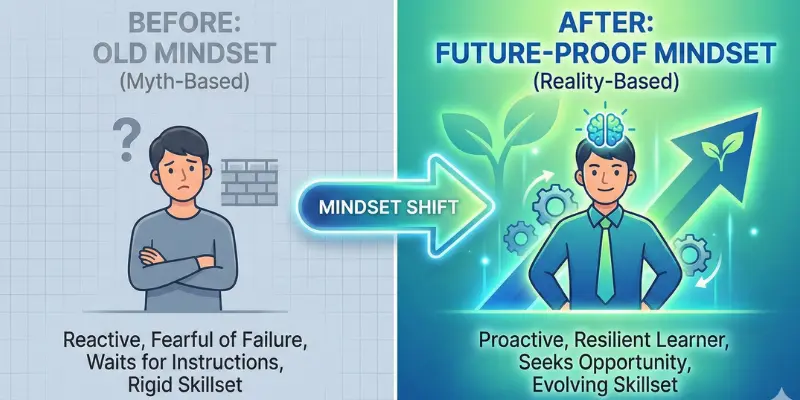
Myth 1: It’s Just “Going with the Flow”
We’ve all heard it: “Just go with the flow,” “Adapt and you’ll be fine.” But here’s the truth: if you’ve been taking this advice, it’s likely leaving you exhausted, reactive, and burnt out.
Here’s what happens when you blindly follow this myth: You’re constantly responding to change without ever getting ahead of it. You’re always in damage-control mode, never proactive. Going with the flow sounds easy, but it’s a fast track to emotional and mental exhaustion.
You need more than passive flexibility to survive today’s workplace — you need active, strategic adaptability.
Action Step:
Tomorrow morning, take five minutes to assess the changes happening in your job. List the three biggest disruptions you’re facing and ask yourself: How can I influence these changes instead of just reacting to them?
Myth 2: You’re Either Born With It or You’re Not
This one’s a killer. “Adaptability is a trait,” they say, “either you have it, or you don’t.” That’s corporate gaslighting at its finest.
The truth? Adaptability is a skill — something that can be learned, practiced, and improved over time. It’s not a mystical, inborn talent that you either possess or lack. Everyone can develop it, but it takes focused effort and the right strategies.
You were told it’s either in your DNA or not. Here’s why that’s complete nonsense: if you’ve survived multiple career pivots or re-orgs, you’ve already adapted more than you realize. The key is to build on what you’ve already done, not to passively wait for some “natural” adaptability to kick in.
Action Step:
Think about the last significant change at work. What did you do to cope with it? Write down one small action you could have taken that would have made adapting to that change easier.
Myth 3: The More You Adapt, the Stronger You Get
We’re constantly told that adaptability is the ultimate strength. But too much of anything can hurt you. The truth is, endless adaptation without a clear purpose is a fast track to burnout.
Think about it: How many times have you adapted to changing expectations, new tools, and evolving team dynamics, only to feel like you’re stuck in a never-ending cycle of change? Over-adapting doesn’t make you stronger. It just leaves you running in circles, never fully grounding yourself.
The real skill isn’t just endless adaptation. It’s adaptability with boundaries, knowing when to say no, and knowing where to draw the line in your personal and professional growth.
Action Step:
Next time you’re faced with a new change at work, ask yourself: Is this change something I can control, or is it just more noise? Practice setting clear boundaries on your time and energy.
Part 2 – What the Fresh 2025–2026 Data Actually Says
Adaptability is no longer just a soft skill; it is a quantifiable survival strategy, and the latest market trends prove it.
10 Numbers You Need to Know Right Now
If you’re still relying on outdated data to guide your approach to adaptability, it’s time to face facts: the game has changed. We’ve gathered the most recent findings, and here’s what the fresh 2025–2026 data reveals about adaptability and its increasing importance in the modern workplace.
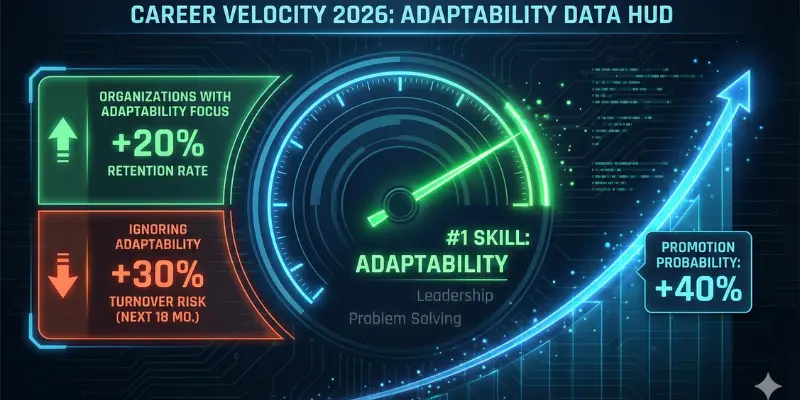
Here’s the reality check: companies that focus on adaptability training see 20% higher employee retention. Meanwhile, organizations that ignore it face 30% higher turnover rates in the next 18 months. And the kicker? The ability to adapt is now the #1 skill sought after by recruiters, ahead of leadership and problem-solving.
You don’t need to take our word for it. The numbers speak for themselves. Adaptability isn’t a soft skill anymore—it’s the foundation of future success.
What Does This Mean for You?
Let’s break it down: In the past, adaptability was seen as “nice to have,” a luxury for workers who were already performing well. But now, in 2026, adaptability is a survival skill.
What’s changing:
- The pace of change is accelerating, and the workforce needs active adaptation strategies—not passive “going with the flow.”
- Employers are demanding more than just quick fixes—they want strategic adaptability.
- The AI-driven economy is making adaptability even more critical. New tools, platforms, and processes are popping up daily, and if you aren’t adjusting quickly, you’re getting left behind.
But it’s not all doom and gloom. The same data shows that adaptable workers are 40% more likely to get promoted within a year of improving their adaptability skills. So, if you’re willing to take action now, your adaptability can open doors that were previously locked.
Why This Data Matters to You
You’re not just a passive player in this game. You can control your adaptability—and the numbers prove it. By actively working on the skills that matter in 2026, you’re not just going to survive the changes. You’re going to thrive in them.
These numbers are your wake-up call. The era of reactive adaptability is over. It’s time to embrace the new, strategic form of adaptability—before it becomes the barrier that holds you back.
Part 3 – Free 2026 Adaptability Scorecard (15 Questions)
Now that you understand why adaptability is critical, it’s time to gain instant clarity on your current skill level.
Core Reader Takeaway – Instant Self-Measurement
You’ve made it this far, so let’s get to the heart of what really matters: your adaptability score. This is the 2026 Adaptability Scorecard, and it’s designed to give you an instant, real-world measurement of where you stand.
For too long, you’ve been told that adaptability is some vague, abstract trait. Well, not anymore. You can now measure your adaptability, identify your strengths, and pinpoint exactly where you need to improve. And the best part? It takes just 5 minutes.
Take the 5-Minute Test
Answer the 15 questions below to determine your score. Once you’re done, we’ll break down your results, and show you exactly what to focus on to boost your adaptability and increase your chances of thriving in 2026. No fluff. No endless theories.
The 15 Questions:
When faced with unexpected change at work, I:
- A) Panic and avoid it
- B) Take some time to adapt
- C) Embrace it and immediately seek ways to thrive
How often do you actively seek out new tools or technology to improve your workflow?
- A) Rarely
- B) Sometimes, when required
- C) Regularly, I proactively explore new tools
When a major project direction changes unexpectedly, I:
- A) Feel frustrated and unsure of how to proceed
- B) Try to adapt, but feel hesitant
- C) Adjust quickly and lead the team through the change
I regularly step outside of my comfort zone to learn something new:
- A) Never
- B) Occasionally
- C) Often, I make learning a habit
When facing a roadblock in a project, I:
- A) Get stuck and struggle to find solutions
- B) Seek help from others
- C) Think outside the box and adjust my approach
How do you feel when presented with new and unfamiliar tasks?
- A) Anxious and overwhelmed
- B) Neutral, but I manage to get through it
- C) Excited and motivated to learn
In the past month, how many times have you successfully led a team through significant change?
- A) None
- B) Once or twice
- C) More than twice
How comfortable are you with AI tools that support your work?
- A) Very uncomfortable
- B) Somewhat comfortable
- C) Very comfortable, I actively explore and use AI tools
How often do you actively unlearn outdated practices at work?
- A) Rarely
- B) Occasionally
- C) Regularly, I prioritize staying up-to-date
When a colleague introduces a new approach, I:
- A) Resist and prefer to stick with what I know
- B) Try it out reluctantly
- C) Embrace it and see how I can improve my workflow
How well do you handle criticism about your adaptability?
- A) I take it personally and get defensive
- B) I listen, but it takes me time to process
- C) I listen and quickly adjust my approach
How often do you step in to help others adapt to change in the workplace?
- A) Rarely
- B) Sometimes, when necessary
- C) Often, I actively help others navigate change
When learning a new skill, I:
- A) Struggle and find it difficult
- B) Take time to adjust but get there
- C) Dive in with enthusiasm and figure it out quickly
How do you manage stress when changes at work start to pile up?
- A) I feel overwhelmed and often burn out
- B) I manage but it takes a toll
- C) I stay calm and find ways to balance it all
When faced with multiple competing priorities, I:
- A) Struggle to decide what to focus on
- B) Manage to juggle a few tasks but feel stretched
- C) Prioritize effectively and handle all tasks smoothly
Your Score: Low / Medium / High – What It Really Means
Now that you’ve taken the test, here’s how to read your score:
- Low Score: You may be struggling to adapt to change effectively, and that’s okay. The first step is awareness. You’re likely overreacting to disruptions and feeling overwhelmed. Focus on practicing one small action at a time to build adaptability, such as unlearning outdated habits and seeking proactive solutions.
- Medium Score: You’re on the right track. You handle change decently, but there’s room to improve. Your adaptability muscles need more consistent exercise, particularly in unlearning outdated practices and proactively seeking new solutions.
- High Score: Congrats, you’ve mastered the art of adaptability. You’re already ahead of the curve and can thrive in the ever-changing work environment. Keep honing these skills and consider how you can help others improve their adaptability.
Part 4 – The 5 Adaptability Skills That Actually Matter in 2026
To succeed in the modern, AI-driven workplace, we need to move past outdated ideas and embrace a set of specific, strategic competencies.
The New, Non-Obvious Framework
Forget everything you’ve been told about adaptability being just about “rolling with the punches.” In 2026, adaptability is a series of deliberate, strategic actions. It’s about knowing what to focus on, when to pivot, and, most importantly, how to avoid burnout while doing it.
The skills that truly matter in today’s fast-paced, AI-driven world aren’t just about “being flexible.” They’re about developing a framework that allows you to not just survive — but thrive. Let’s break down the 5 key adaptability skills that will set you apart in the next 5 years.
1. Unlearning – The New #1 Skill (with 5-Minute Drill)
You’ve spent years building habits, processes, and ways of thinking that worked—until they didn’t. And now? The ability to unlearn is your most powerful adaptability skill.
Unlearning isn’t about forgetting what you know. It’s about actively letting go of outdated practices, mindsets, and tools that no longer serve you. In 2026, being adaptable means releasing the past to make space for new ways of thinking, working, and leading.
Why It Matters:
The AI-driven world is constantly changing, and the only way to keep up is to shed your old strategies. If you’re holding onto them, you’ll quickly become irrelevant.
Action Step (5-Minute Drill):
Take the next 5 minutes to identify one old habit or tool you’ve been clinging to, even though it’s no longer effective. Make a commitment to stop using it, and replace it with something new, even if it’s just a small tweak.
2. Prompt Engineering as Daily Adaptation
In the world of AI, your adaptability hinges on one essential skill: prompt engineering. And no, this isn’t just for tech experts — it’s for everyone who uses AI tools at work, which, in 2026, is just about everyone.
Prompt engineering is the art of asking the right questions to get the best results from AI tools. It’s about being able to harness the power of AI to improve efficiency, creativity, and problem-solving, whether you’re working on a report, a marketing campaign, or solving a complex problem.
Why It Matters:
AI isn’t going away — it’s only going to get more integrated into our daily tasks. Those who know how to leverage AI effectively will be the ones who thrive. The good news? It’s a skill you can pick up in a matter of days.
Action Step:
Find one AI tool you’re currently using and spend 5 minutes experimenting with new prompts to get a better result. Whether it’s ChatGPT for writing or an AI analytics tool, make it a habit to tweak your prompts to get better insights.
3. Tool-Stacking Speed
In 2026, having a single tool to get the job done is a thing of the past. The key to thriving in the modern workplace is tool-stacking speed — being able to quickly learn and switch between different tools to optimize your workflow.
The pace of technological innovation means there’s always a better tool for the job. The challenge is keeping up with them and knowing when to adopt a new tool that could radically improve your efficiency or productivity.
Why It Matters:
Those who can learn and integrate tools quickly will not only get things done faster but will also be seen as leaders in adopting the best practices. The faster you can move between tools without losing momentum, the more adaptable and valuable you become.
Action Step:
Pick a new tool that you’ve heard about but haven’t explored yet. Spend 10 minutes getting familiar with its key features, and then set a goal to implement it into your workflow by the end of the week.
4. AI Delegation Radar
The fourth skill you need in 2026 is AI delegation radar. This isn’t about doing everything yourself. It’s about knowing when and how to delegate tasks to AI, allowing you to focus on higher-level, creative, and strategic work.
Whether it’s automating routine tasks, using AI to generate insights, or leveraging AI for decision-making, your ability to delegate to AI will give you more bandwidth to focus on the work that actually moves the needle.
Why It Matters:
Delegating to AI isn’t just about saving time — it’s about making smarter, data-driven decisions and empowering yourself to focus on what you do best. Those who can delegate tasks to AI effectively will be the ones who stay ahead of the curve.
Action Step:
Identify one repetitive task you’re currently doing manually, and try to automate it using an AI tool. This could be anything from scheduling meetings to generating reports. Start small, but start now.
5. Obsolescence Spotting
The final skill you need in 2026 is obsolescence spotting. This is the ability to spot what’s becoming outdated — not just in your tools and processes, but in entire industries and job roles.
Being able to identify obsolescence early means you can pivot before it’s too late, whether that’s upskilling, shifting roles, or adopting new practices that keep you relevant.
Why It Matters:
If you’re not paying attention, you could easily become obsolete, especially as AI and automation change the workforce. The ability to spot shifting trends and evolving technology will ensure that you always stay ahead.
Action Step:
Look at your current role or industry and identify one area where you could be replaced by AI or automation in the next 5 years. Then, take one proactive step to either upskill or pivot to a new opportunity that will keep you ahead of the curve.
Part 5 – The Hidden Cost: When Too Much Adaptability Burns You Out
To maintain resilience, we must first understand the crucial distinction between sustainable adaptation and crippling, unchecked demand.
Emotional Empathy + Leadership Trust Angle
Here’s the hard truth: while adaptability is essential for survival in 2026, too much of it can destroy your mental health and burn you out faster than a project deadline.
In today’s workplace, we’re constantly expected to “adapt” — to changes in technology, organizational structure, team dynamics, and leadership. But here’s the thing: if you’re constantly bending to every change without giving yourself the space to recharge, it won’t make you more resilient. It’ll make you exhausted and emotionally drained.
Adaptability without boundaries leads to the silent epidemic of workplace burnout, and it’s spreading faster than any organizational shift you’ve ever experienced.
The Three Warning Signs You’re Over-Adapting
You might be telling yourself, “I’m adaptable — I’m doing what’s needed.” But if you’re seeing these three warning signs, it’s time to stop and reevaluate your approach.
You’re Reacting More Than You’re Leading:
- When you’re overwhelmed by constant change, you start reacting to it instead of proactively leading it. If you’re constantly being pulled in different directions and feeling like you’re “always putting out fires,” that’s a sign you’re adapting too much, too quickly.
Your Energy Reserves Are Depleted:
- If you’re feeling mentally drained, have trouble sleeping, or find it hard to focus on important tasks, it’s a clear indicator that the changes around you are costing you more than just time. Over-adapting exhausts your emotional and physical reserves.
You’re Losing Trust in Yourself and Others:
- When you’re constantly shifting gears, it’s easy to lose track of your long-term goals and values. If you’re noticing a decline in your confidence or trust in your decisions, it’s time to take a step back. Excessive adaptability can damage not only your mental health but also your relationships with others.
Action Step:
Take a moment right now to reflect on your recent adaptability actions. Ask yourself: “Am I reacting to change, or am I leading it?”
If you’re feeling burned out, commit to one day this week where you focus on rest and actively resist the urge to adapt to new changes.
How Over-Adaptation Kills Team Trust – And What to Do Instead
If you’re a leader, this is even more important: over-adaptation doesn’t just burn you out — it also destroys trust with your team.
When you’re constantly shifting priorities, changing strategies, or moving the goalposts to adapt to new circumstances, it can leave your team members feeling uncertain, confused, and ultimately, less likely to trust your leadership. The more you adapt without clear boundaries or a plan, the more your team questions whether they can count on you — and that’s a killer for team morale.
So, how can you keep your adaptability in check without alienating your team?
The key is transparency. Be clear with your team about why changes are happening, how they will affect them, and how they will be involved in the adaptation process. Don’t just pivot; bring your team along for the ride. Trust builds when you actively involve others in change and set expectations for both short-term and long-term impacts.
Action Step:
If you’re in a leadership role, schedule a 15-minute check-in with your team to discuss recent changes and how they’re affecting everyone. Ask for feedback on what’s working and what’s not, and commit to providing a clearer roadmap for upcoming changes.
60-Second Burnout Prevention Checklist
Here’s a simple, no-nonsense burnout prevention checklist you can follow to maintain your adaptability without sacrificing your well-being:
Set Boundaries:
- Stop accepting every new project or task without considering the impact on your mental energy.
Pause and Reflect:
- Set aside 10 minutes each day to assess your emotional and physical state. Are you feeling drained? Are you losing sight of your priorities? If so, schedule time for self-care.
Delegate Where Possible:
- Identify tasks that can be delegated to others or automated with AI. Stop trying to do everything yourself.
Seek Support:
- Check in with a mentor, peer, or coach regularly to stay grounded and aligned with your long-term goals.
Don’t Overload Your Schedule:
- Prioritize your most important tasks and let go of less critical responsibilities.
Action Step:
Pick one item from this checklist and implement it today. If you’re already feeling overwhelmed, start by delegating one task that’s draining you and focus on something that recharges you.
Part 6 – Adaptability Skills Examples by Industry (Cheat-Sheets)
Understanding the concept is only the first step. True mastery comes from seeing these skills in action and applying them directly to the unique challenges of your field.
Real-World Relevance, Instantly Usable
You’ve learned about the core adaptability skills, but how do they actually play out in your day-to-day job? Here’s where the rubber meets the road. In this section, we’ll break down exactly what adaptability looks like in different industries. Whether you’re in Tech, Healthcare, Education, or Freelance work, the core principles of adaptability still apply — but how they manifest can vary.
Here are some industry-specific examples of adaptability skills in action, and how you can implement them today:
1. Tech
The rapid, often unpredictable pace of technological evolution makes continuous learning non-negotiable for success.
Adaptability Skill: AI Integration and Continuous Learning
In the tech industry, adaptability is all about staying ahead of the curve with the latest tools, programming languages, and AI advancements. As technologies evolve rapidly, tech professionals must continuously unlearn outdated tools and embrace new ones.
Example:
You’re a software developer who’s used a specific coding language for years, but suddenly, a new programming language is becoming industry-standard. Instead of resisting the change, you proactively learn the new language, integrate it into your projects, and lead your team through the transition.
Action Step:
Commit to learning one new AI tool (like TensorFlow, for machine learning) this month. Spend 20 minutes a day on tutorials or a course.
2. Healthcare
The constant evolution of patient care and treatment protocols necessitates a comfort with data-driven decisions and new digital platforms.
Adaptability Skill: Embracing Telemedicine and Digital Health Tools
In the healthcare industry, adaptability means not just keeping up with new technologies like telemedicine but also embracing data-driven decisions and patient-centered approaches. Healthcare workers must adjust to new treatment protocols and technological advancements.
Example:
A nurse quickly adapts to a new telemedicine platform to deliver virtual consultations. Initially overwhelmed, they set aside time to learn the new system, gaining comfort with the interface and soon becoming a point of reference for colleagues who struggle.
Action Step:
Identify one new digital tool or platform used in your department and dedicate 15 minutes a day to mastering it.
3. Education
Educators must constantly bridge the gap between traditional instruction and the rapidly evolving demands of digital classrooms and diverse student needs.
Adaptability Skill: Online Teaching and Hybrid Learning Models
Educators need to be comfortable with digital classrooms and hybrid learning environments. The ability to transition between traditional face-to-face teaching and online methods while maintaining student engagement is a crucial adaptability skill.
Example:
A teacher who previously only taught in-person classes is now faced with the challenge of remote teaching. Instead of avoiding the change, they attend online teaching workshops, learn new digital tools, and set up a streamlined online curriculum for students.
Action Step:
Start experimenting with one new digital teaching tool (like a virtual whiteboard or an online quiz platform) and incorporate it into your lessons.
4. Marketing
The hyper-speed of consumer behavior and platform shifts requires marketers to maintain continuous vigilance and the ability to pivot campaigns instantly.
Adaptability Skill: Real-Time Market Analysis and Social Media Agility
In marketing, adaptability means staying on top of real-time data, understanding market shifts, and adapting your campaigns quickly. With the rise of social media and influencer marketing, being able to adjust campaigns on the fly is a key skill.
Example:
A marketer monitoring social media trends notices a shift in consumer behavior due to a viral trend. They quickly adapt the brand’s campaign to reflect the change, launching a real-time promotion that resonates with the new demand.
Action Step:
Spend 10 minutes a day analyzing the latest social media trends and consider how you could pivot a current campaign based on these trends.
5. Freelance/Gig Economy
Success in the fast-paced, client-driven contract economy relies entirely on the ability to efficiently manage fluctuating workloads and diverse project demands.
Adaptability Skill: Multi-Tasking and Quick Pivoting
Freelancers and gig workers often juggle multiple projects and clients. Adaptability in this industry involves multi-tasking, being able to quickly switch between different clients’ needs, and adjusting to the ebb and flow of workloads.
Example:
A freelance writer is working on three different projects, each with tight deadlines. Instead of becoming overwhelmed, they organize their schedule to allow flexibility, quickly pivoting between different types of work depending on urgency and priority.
Action Step:
Create a flexible weekly schedule that allows for at least two hours of uninterrupted focus time each day, while keeping room for client work.
Part 7 – How to Improve Adaptability Skills This Month (No Overwhelm)
Improving adaptability often feels like a massive undertaking, but the biggest obstacle is usually overwhelm. We can bypass this paralyzing feeling by focusing on strategic, low-effort changes that deliver high impact.
Zero-Friction Action Plan
Improving your adaptability doesn’t have to be overwhelming. In fact, it shouldn’t be. The trick is to focus on one small habit at a time, making gradual, sustainable improvements that actually stick.
Forget the “10 tips for success” lists — they only add to your stress. Instead, we’re going to break it down into bite-sized actions you can implement today, with zero friction.
By the end of this section, you’ll have a clear 30-day plan that you can start right now — and it won’t make you feel like you’re adding more to your plate.
The 30-Day “One Tiny Habit” Calendar (Printable)
Start small. One tiny habit per day is all it takes. The goal here isn’t to overhaul your entire life overnight. It’s about building consistent, incremental improvements that turn into real growth.
Here’s how it works:
Every day, you’ll commit to one tiny change that will boost your adaptability. These are simple, easy-to-implement actions that will fit into your daily routine, and you’ll feel the difference by the end of the month.
- Day 1: Unlearn One Outdated Habit – Identify one habit or tool you’re still using that’s no longer serving you. Stop using it today.
- Day 2: Experiment with One New AI Tool – Try out a new AI-powered tool for 10 minutes. See how it can make your work easier.
- Day 3: Ask a New Question – Instead of just responding to an email, try asking a question that forces you to think in new ways.
- Day 4: Set a Boundary – Say no to something that isn’t aligned with your goals, even if it feels uncomfortable.
- Day 5: Practice One Quick Adaptation – Take five minutes to adapt to a small change at work (e.g., a new process, tool, or project). Notice how it feels.
5 Resume & LinkedIn Lines That Actually Get Noticed
Want to make sure your adaptability shines through on your resume or LinkedIn profile? Here are five lines that will make your adaptability skills impossible to overlook. These aren’t generic buzzwords — they’re actionable, real-world examples of how you’ve adapted to change and thrived in the face of disruption.
- 1. “Led my team through the transition to [new technology], increasing productivity by X% in [time frame].”
- 2. “Embraced a new way of working by adopting AI tools to improve team collaboration and reduce workflow bottlenecks.”
- 3. “Successfully adapted to [new role/industry] by learning [new skill], improving performance metrics by X%.”
- 4. “Streamlined [process/task] using [tool], reducing time spent by X hours weekly.”
- 5. “Proactively sought out new learning opportunities, mastering [skill/technology], which improved project outcomes.”
Action Step:
Take one of these lines and adapt it to your current job or experience. Use it to update your resume or LinkedIn profile today.
How to Stay on Track Without Overwhelm
Improving your adaptability shouldn’t feel like a second job. Here are three simple tips to make sure you stay on track without overloading yourself:
- Focus on Progress, Not Perfection: If you miss a day on your 30-day habit plan, don’t stress. Just pick up where you left off.
- Celebrate Small Wins: Each time you complete one of your tiny habits, take a moment to recognize it. This isn’t about big milestones — it’s about steady, consistent progress.
- Incorporate Adaptability into Your Routine: Build adaptability into your daily work routine by making it part of the way you approach tasks. Look for ways to improve existing processes or learn new tools every day.
Action Step:
At the end of each week, reflect on what went well and where you struggled. Jot down one small success from the week — it could be as simple as learning a new tool or managing a stressful change effectively.
Conclusion
By now, you’ve taken the 2026 Adaptability Scorecard, learned the 5 key adaptability skills, and started implementing one tiny habit at a time. But this isn’t where your journey ends. Adaptability is a lifelong skill, and if you want to thrive in 2026 and beyond, you have to keep building, refining, and adapting — just like you’re doing now.
You’re already ahead of the curve by taking the time to read this article and start improving your adaptability. Most professionals out there are still stuck in the old mindset that adaptability is just about “going with the flow.” You’re not one of them.
Now, it’s time to take everything you’ve learned and turn it into action.
FAQs – Adaptability Skills in 2026
1. What are adaptability skills, and why are they important in 2026?
Answer:
Adaptability skills refer to your ability to adjust to changes in your environment, job role, or team dynamics. In 2026, the pace of change is faster than ever, driven by technology like AI, automation, and continuous shifts in the job market. Being adaptable isn’t just a nice-to-have trait anymore—it’s critical for career survival. Without the ability to pivot quickly, you risk becoming irrelevant in a world where staying static is no longer an option.
2. What’s the biggest misconception about adaptability skills?
Answer:
A major misconception is that adaptability is just about being flexible or “going with the flow.” This passive approach is outdated. True adaptability is strategic—it’s about knowing how to lead through change, manage emotional energy, and unlearn outdated practices. In 2026, it’s not about being flexible for flexibility’s sake; it’s about taking control of change and steering it in a direction that benefits both you and your team.
3. How can I improve my adaptability skills without feeling overwhelmed?
Answer:
Improving adaptability doesn’t mean you need to overhaul everything overnight. Start with small, consistent actions. Try the 30-day adaptability habit calendar where you focus on one tiny habit each day. For example, on day one, practice unlearning one outdated tool or habit. The key is to make gradual changes, not sudden, overwhelming shifts. Over time, these tiny habits will add up and significantly improve your ability to adapt.
4. What should I do if I’m feeling burned out from constant adaptation at work?
Answer:
Burnout often happens when you’re constantly adapting without clear boundaries. If you’re over-adapting, it means you’re reacting to changes, not leading them. First, pause and assess where you’re spending your energy. Are there areas where you can set boundaries or say no? Use the burnout prevention checklist to track how much energy you’re spending on unimportant tasks and focus on what truly matters. Remember, adaptability with boundaries is key to long-term success.
5. How do I know if I’m adapting the right way in my job?
Answer:
A good indicator is whether your adaptations are helping you become more effective and proactive, not just reactive. Ask yourself: Are you getting ahead of change instead of just responding to it? Are you unlearning outdated practices and tools that slow you down? If you’re consistently leading through change, rather than just following it, you’re adapting the right way. Use the Adaptability Scorecard to assess your strengths and blind spots, and align your actions with the skills that matter most in 2026.
6. Can I truly learn to be more adaptable, or is it a trait I’m born with?
Answer:
Adaptability is definitely a skill you can learn, not a trait you’re born with. While some may naturally find it easier to adjust to new situations, anyone can build adaptability through intentional practice. It’s about being proactive, learning new tools, unlearning old habits, and gradually shifting your mindset. By practicing new adaptability habits every day, you can become a highly adaptable professional, regardless of your starting point.
7. How do adaptability skills relate to AI and technology in 2026?
Answer:
In 2026, AI and technology aren’t just tools—they’re drivers of change. If you want to stay relevant, your adaptability skills must include AI fluency. This means being able to quickly learn and use new AI tools and technologies that can streamline your work. It also means understanding how AI can help you delegate tasks, automate processes, and maximize your efficiency. In short, adaptability now includes mastering the ability to work with technology, not just survive it.





- Be Respectful
- Stay Relevant
- Stay Positive
- True Feedback
- Encourage Discussion
- Avoid Spamming
- No Fake News
- Don't Copy-Paste
- No Personal Attacks
- Be Respectful
- Stay Relevant
- Stay Positive
- True Feedback
- Encourage Discussion
- Avoid Spamming
- No Fake News
- Don't Copy-Paste
- No Personal Attacks
