Master Patience in 2026: The 4-Step Blueprint for Reducing Stress, Building Resilience, and Achieving Long-Term Success
Published: 01/01/2026
We live in a world where everything is moving faster than ever—AI answers in seconds, social media feeds refresh in real-time, and everyone’s racing toward the next big thing. But despite the speed of technology, real progress—whether in your health, relationships, or career—still takes time. You might feel overwhelmed trying to keep up, guilty when things don’t move as fast as you’d like, or frustrated by how long it’s taking to see results. And it’s completely understandable.
The truth is, patience isn’t fading—it’s becoming your greatest edge in a world where everything is instant. In 2025, cultivating patience is not just a luxury; it’s a skill that helps you navigate this constant rush, reduce stress, and unlock real, lasting success.
That’s why I’m sharing the 2025 Patience Blueprint: a simple, evidence-backed 4-step system to help you turn frustration into calm strength. Patience doesn’t mean passively waiting—it’s about emotional regulation, resilience, and building long-term success. Whether you’re struggling with modern life’s endless pace or finding it hard to focus on the bigger picture, this blueprint will show you how to transform impatience into lasting inner peace.
In this post, we’ll explore the science behind patience, its real-world benefits, why it’s more crucial than ever in today’s fast-paced world, and how you can start practicing it right now. By the end, you’ll be ready to take the first step toward a calmer, more successful life—one small choice at a time.
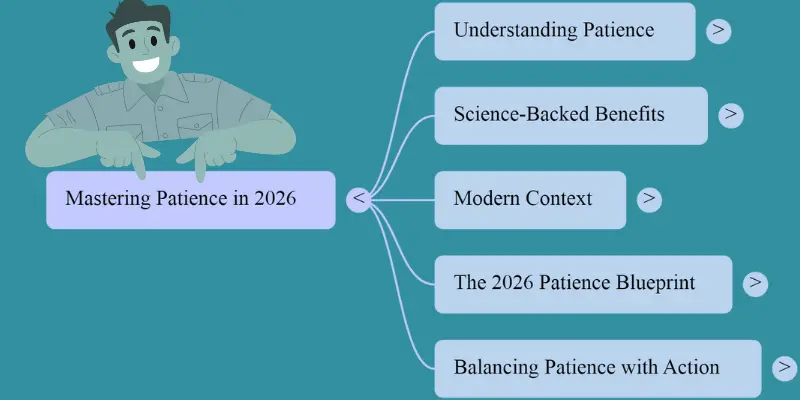
Step 1 – Understand What Patience Really Is
In our fast-paced world, we’ve grown accustomed to quick answers and instant gratification. But when life doesn’t move at that speed, frustration and stress often follow, leaving us questioning why patience feels so hard to achieve.
Acknowledge the Struggle:
In a world where we’re conditioned to expect instant answers, instant satisfaction, and constant connectivity, patience can feel like an outdated skill—or even an unnecessary one. You may find yourself tapping your foot, refreshing your browser, or wondering why things aren’t progressing as quickly as you’d hoped. And when life doesn’t move at your speed, it can trigger frustration, anxiety, or feelings of failure. Sound familiar?
What Patience Really Is:
Patience isn’t about passive waiting or resigning yourself to frustration. In fact, patience is a core emotional regulation skill—and like any skill, it’s something you can learn and strengthen. It’s the ability to stay calm, composed, and focused, even when life doesn’t move at the pace you want. It’s about making active choices to handle challenges with resilience, instead of letting frustration take control.
Emotional Intelligence and Patience:
At the heart of patience lies emotional intelligence (EQ). This means understanding and managing your emotions, especially when you’re faced with delays, obstacles, or things outside of your control. People with high EQ recognize their frustration as a signal, not something to act on impulsively. Instead of getting stuck in impatience, they pause, reflect, and choose their response wisely. Cultivating patience enhances your ability to manage emotions, especially in stressful situations.
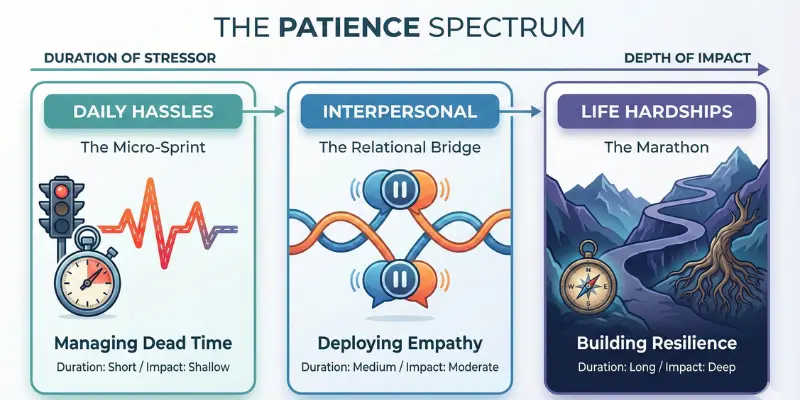
The Three Types of Patience:
Patience isn’t one-size-fits-all. It shows up in different forms depending on the situation:
- Daily Hassles: The small, everyday annoyances—waiting in line, traffic, or an unexpected delay. The key here is how you deal with the wait: can you find calm in what feels like “dead time”?
- Interpersonal Patience: In relationships—whether personal or professional—patience is about understanding, empathy, and maintaining composure, especially when others don’t act according to your expectations.
- Life Hardships: The long-term tests of patience, such as dealing with illness, career setbacks, or personal loss. This type of patience is about building resilience, trusting the process, and finding meaning in the struggle.
Quick Myth-Bust:
It’s common to think that patience is something you’re either born with or not. But that’s simply not true. Patience is learned, and anyone can develop it. The more you practice it in small moments, the stronger it becomes in bigger, more challenging situations. Remember, patience isn’t passive—it’s active, intentional, and a choice you can make.
Step 2 – Discover the Science-Backed Benefits of Patience
By now, you might be wondering, “Okay, patience sounds great in theory, but what’s in it for me in the long run?” In a world that constantly demands more, it can feel hard to imagine how taking things slower might actually make life better. But here’s the truth: patience isn’t just about waiting—it’s about thriving.
The Mental Well-Being Boost:
Patience has a direct impact on your mental health. Research consistently shows that people who cultivate patience experience lower levels of stress, anxiety, and depression. Why? Because when you practice patience, you’re less likely to react impulsively to the things that frustrate you. Instead of being swept up in immediate emotions, you create space for calm, which helps you respond thoughtfully. This emotional regulation lowers stress hormones and increases feelings of hope and gratitude—two key factors that contribute to overall mental well-being.
Patience and Relationships:
It’s not just your mental state that benefits from patience—it’s your relationships, too. When you’re patient, you’re more likely to listen instead of interrupting, to empathize instead of judge, and to forgive instead of hold a grudge. Science backs this up: people who practice patience in relationships tend to have stronger, more empathetic bonds. Patience allows you to see things from others’ perspectives and resolve conflicts with more grace. Whether with family, friends, or colleagues, practicing patience enhances communication, trust, and connection.
Building Resilience for Long-Term Success:
Another incredible benefit of patience is its role in building resilience. Life will throw curveballs—delays, obstacles, and setbacks. But when you have the ability to remain patient, you become better at navigating challenges with a calm, solution-oriented mindset. Resilience isn’t about bouncing back from a setback quickly; it’s about staying steady and sticking with your goals, even when the going gets tough. Patience helps you embrace delayed gratification, which is a key ingredient for achieving long-term success, whether in your career, personal goals, or health.
The Physical Health Edge:
Believe it or not, practicing patience can also improve your physical health. Studies have found that stress—often triggered by impatience—can negatively impact heart health, immune function, and overall vitality. By practicing patience, you actively reduce the physiological toll that stress takes on your body. The calming effect of patience also encourages you to engage in healthier behaviors, such as better sleep, more mindful eating, and even regular exercise—all of which contribute to better long-term health.
Patience and Productivity:
Finally, patience can significantly boost your productivity—but not in the way you might think. In today’s fast-paced world, the instinct is often to act quickly and push through. However, patience gives you the clarity to focus on what really matters. It helps you avoid the trap of overworking and burning out by teaching you to prioritize long-term outcomes over immediate results. The ability to slow down, reflect, and plan strategically leads to more efficient and sustainable progress. Instead of rushing from task to task, patience enables you to take your time and do things right, ultimately improving the quality of your work.
Step 3 – Why Patience Matters More in 2026
It’s hard to deny the truth: we live in a world where everything is designed for speed. We’re conditioned to expect instant results, constant updates, and immediate satisfaction. If it’s not fast, it feels irrelevant. This constant push to “get things done now” can leave you feeling overwhelmed, frustrated, and burned out. Patience might seem like a luxury in a world that moves at a breakneck pace, but in reality, it’s more essential than ever.
The Hidden Cost of Instant Culture:
In the digital age, the pressure to move fast is all around us. Social media feeds refresh every few seconds, and notifications never stop. The constant comparison to others’ curated lives makes us feel like we’re falling behind if we’re not constantly achieving, posting, or moving forward. This “always-on” culture encourages instant gratification, which can leave us feeling restless, stressed, and unable to truly enjoy the present moment. The result? A lack of patience that leads to frustration, anxiety, and even burnout.
Patience in the AI Era:
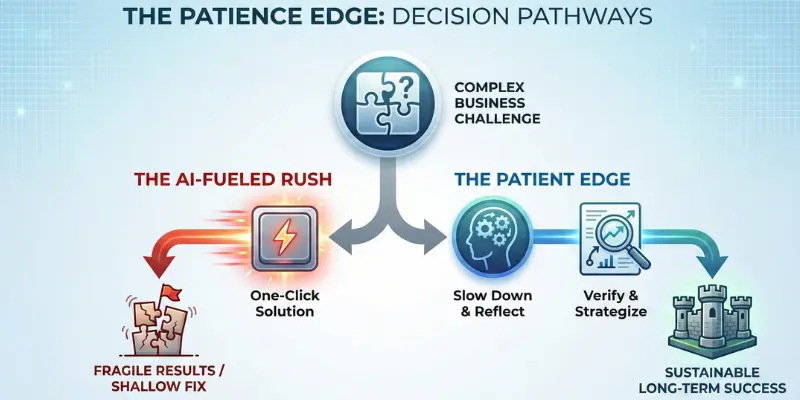
Ironically, the very tools designed to save us time—like AI, automation, and smart technology—can make us less patient. With AI delivering answers in seconds, it’s easy to start expecting everything to be instantaneous. But these tools, while useful, can make us impatient when things take longer than expected. In the workplace, for instance, AI may help you complete tasks faster, but the bigger picture of long-term success still requires patience. Success doesn’t come from one-click solutions—it’s about the process. That’s where patience gives you an edge: the ability to slow down, reflect, and make thoughtful decisions instead of rushing into quick fixes.
Real-Life Case Studies of Patience in Action:
It might feel like the world is pushing for speed, but there are countless examples of success through patience that stand the test of time. Take Steve Jobs and the development of Apple. Jobs was known for his unwavering patience and vision, even when others doubted him. Instead of rushing out products, he focused on creating revolutionary technology that would endure. Elon Musk, with Tesla and SpaceX, also embodies this long-term vision. Musk has faced countless setbacks and criticisms over the years, but his patience and persistence have helped him turn ideas into reality. These leaders didn’t rush; they invested years, if not decades, in perfecting their work. They knew the importance of patient innovation in achieving truly groundbreaking success.
Patience in the Face of Volatility:
Patience is also a vital trait in today’s volatile world. In the past, a company could afford to take its time, but now we’re faced with rapid shifts in the economy, technology, and even societal expectations. Yet, patience remains a crucial counterbalance. Just like the famous quote “slow and steady wins the race,” patience enables you to focus on long-term goals rather than getting distracted by every immediate crisis or trend. It provides you with the clarity to make more thoughtful, less reactive decisions—whether it’s in your personal life or at work.
Step 4 – Know the Limits: Balancing Patience with Action
By now, you might be thinking, “Okay, patience sounds wonderful, but there’s a limit, right? How do I know when to wait, and when to act quickly?” You’re absolutely right—patience doesn’t mean endless tolerance. There’s a fine line between patiently enduring a situation and tolerating things that shouldn’t be tolerated. Too much patience can leave you stuck, passive, and missing opportunities. So, how do you strike that perfect balance?
The “Endless Patience” Myth:
There’s a misconception that patience is about tolerating everything, no matter how uncomfortable or toxic the situation might be. But that’s not true. In fact, unhealthy patience—the kind where you keep waiting for things to change without taking action—can be just as harmful as impatience. You don’t have to settle for situations that drain you. True patience is about knowing when to wait for the right moment, but also when to take action and make changes if things aren’t working. It’s about discernment: patience in the right circumstances and action when necessary.
Situational Judgment: When Patience is Needed vs. When to Act:
Patience is incredibly useful, but not in every scenario. Sometimes, waiting can be counterproductive—like when you’re faced with an opportunity that requires immediate action. In these cases, swift decision-making and urgency are necessary. On the other hand, if you rush through decisions or actions without careful thought, you might miss important details or cause more harm than good. The key is learning to judge the situation:
- Patience is needed when you’re facing long-term projects, building relationships, or dealing with life’s natural setbacks.
- Action is needed when you have a clear opportunity to improve your situation, solve a problem, or make progress toward a goal.
The Optimal Patience Model:
Studies show that moderate patience—the ability to wait without losing momentum or giving up—is associated with the highest levels of well-being. It’s not about waiting indefinitely, nor is it about rushing. It’s about knowing when to take a step back and be patient, and when to move forward with intent. A well-balanced approach will allow you to remain calm and focused, while still being responsive when action is needed. This model of patience gives you the clarity and resilience to keep moving forward, even when progress feels slow.
When Urgency Is the Wiser Choice:
Sometimes, urgency is the right approach, especially when a delay could cause negative consequences. For instance, if you’re faced with a work deadline or a time-sensitive opportunity, patience isn’t going to serve you. In these situations, taking quick, deliberate action is essential. The key to balancing urgency and patience is learning how to prioritize—knowing when to act, and when to stay the course.
The 2026 Patience Blueprint: 4 Evidence-Based Steps to Cultivate Patience Today
Now that we’ve explored why patience matters more than ever in today’s fast-paced world, you might be thinking, “This all sounds great, but how do I actually start practicing patience in my day-to-day life?” The good news is, patience isn’t something you have to wait to develop—it’s a skill you can start building right now. And it doesn’t take a drastic overhaul of your life. In fact, you can begin with small, manageable steps that will pay off big over time.
Here’s the 2026 Patience Blueprint—a simple, 4-step system based on research and real-life strategies to help you build patience in the modern world.
Step 1: Identify Your Triggers and Reframe “Dead Time”
Think about those moments when you feel most impatient—waiting in line, traffic jams, or when a task takes longer than expected. These “dead time” situations often trigger frustration, leaving you feeling like you’re losing control. But those moments don’t have to be wasted.
Actionable Tip:
Start by identifying what triggers your impatience. Is it waiting for a response to an email? Being stuck in traffic? Once you’ve identified your common impatience triggers, you can begin to reframe them. Instead of seeing them as lost time, use those moments to practice mindfulness. Take a few deep breaths, count to ten, or focus on something small and positive in your environment. Reframing “dead time” as a chance to reset will help you practice patience and feel more in control of your emotions.
Step 2: Build Daily Habits (Mindfulness and Patience Tools)
In our fast-paced world, taking a moment to slow down can feel impossible. But patience isn’t something that happens overnight—it’s built through consistent practice.
Actionable Tip:
Make patience a part of your daily routine by incorporating simple mindfulness tools. Start small:
- Deep Breathing: When you’re feeling rushed or impatient, take three slow, deep breaths to help calm your nervous system.
- Buffer Time: Build 5-10 minutes of extra time into your schedule to account for delays or unexpected setbacks. This helps you avoid feeling rushed and frustrated.
- Small Wins: Choose one small thing each day where you can practice patience. Whether it’s waiting for a coffee order or listening without interrupting, celebrate those small wins and reflect on how they make you feel.
By consistently practicing these small habits, you’re gradually training yourself to become more patient in everyday situations.
Step 3: Practice Patience in Relationships and Work
Patience is essential in relationships—whether with family, friends, or colleagues. But let’s be real: it’s hard to be patient when someone else isn’t meeting your expectations, or when a colleague is slow to respond. It’s easy to feel impatient in these situations. But practicing patience in relationships actually improves your connection with others.
Actionable Tip:
To practice patience in your relationships:
- Empathy Pauses: When you feel frustration rising in a conversation, take a pause. Give the other person space to speak, and try to understand their perspective.
- Calm Responses: When your boss or a colleague says something that triggers impatience, instead of reacting immediately, take a deep breath and respond calmly. You’ll be surprised how this can de-escalate situations and strengthen your relationships.
In work, patience with colleagues, clients, and the process can help you build stronger collaborations and more positive outcomes.
Step 4: Reflect and Adjust for Long-Term Resilience
Building patience is a journey, not a destination. You’ll have days when impatience creeps in, especially when things feel out of your control. But the key is reflecting on your progress and adjusting for growth.
Actionable Tip:
At the end of each week, take 5 minutes to reflect:
- Where did you show patience?
- Where did impatience take over?
- What can you adjust for next week?
This reflection process allows you to course-correct and build your patience gradually. Just like any skill, consistency is key. Over time, you’ll find that you’re able to weather challenges with greater calm and resilience.
Your 7-Day Patience Challenge
It’s easy to get caught up in the rush of daily life. You’ve read about the benefits of patience, and you understand the importance, but how do you make it a real part of your day? Small steps are the key. The goal of this challenge is to help you build patience without overwhelming you. It’s about gradually incorporating patience into your everyday routine—one manageable action at a time.
This challenge isn’t about perfection. It’s about progress. By the end of the week, you’ll not only have practiced patience, but you’ll also see how small, deliberate choices can help you feel calmer, more focused, and more resilient.
Here’s how the 7-Day Patience Challenge works: Each day, focus on one action that will help you build patience. Keep it simple. Reflect at the end of the day on how it went, and make a note of any progress or challenges.
Day 1: Identify One Trigger
What to Do:
Take a moment to identify one common impatience trigger in your day. It might be something like waiting for a slow webpage to load, being stuck in traffic, or feeling frustrated when others don’t meet your expectations.
Why It Works:
Awareness is the first step to change. By identifying your triggers, you can start to recognize when impatience is about to arise—and prepare yourself to respond differently.
Day 2: Reframe a Delay
What to Do:
The next time you find yourself waiting—whether in line, in traffic, or for a response—pause and reframe the situation. Instead of feeling frustrated, see it as an opportunity to breathe, think, or reflect. Maybe even use the time to listen to a short podcast or take a few mindful breaths.
Why It Works:
Reframing delays shifts your perspective. What once felt like wasted time becomes a moment to center yourself. Small, deliberate pauses like these make patience more manageable.
Day 3: Practice Empathy in Conversations
What to Do:
The next time you have a conversation, particularly one that’s difficult or frustrating, try to pause and practice empathy. Instead of immediately reacting or interrupting, take a moment to really listen. Try to understand where the other person is coming from before responding.
Why It Works:
Being patient in conversations is a key way to build deeper relationships. Empathy pauses allow you to engage more thoughtfully and create a more positive, connected interaction.
Day 4: Build Buffer Time Into Your Schedule
What to Do:
Add 5–10 minutes of buffer time to your schedule today. Whether you’re going to a meeting or heading to an appointment, leave extra room for unexpected delays. Use that extra time to stay calm, focus, or reset before diving into the next task.
Why It Works:
Buffer time helps you avoid feeling rushed and stressed. Instead of racing to get to the next thing, you can approach each task with a little more ease and patience.
Day 5: Reflect on Your Progress
What to Do:
Take 5 minutes at the end of the day to reflect on how your patience-building exercises are going. Did you manage to stay calm in a stressful situation? Did you notice any improvements in how you responded to delays? Write it down.
Why It Works:
Reflection reinforces progress. By looking at your improvements, you can see how patience is starting to become a habit, not just a one-off practice.
Day 6: Practice Patience in a Challenging Situation
What to Do:
Choose a situation that typically frustrates you—whether it’s dealing with a long wait, a difficult task, or a challenging conversation. Approach it with patience, and take the opportunity to practice breathing, pausing, or responding calmly, no matter how challenging the situation is.
Why It Works:
By practicing patience in real-life challenges, you’ll strengthen your ability to stay calm and focused when things don’t go as planned. Patience under pressure builds long-term resilience.
Day 7: Share Your Experience
What to Do:
Share your experience with someone—a friend, family member, or even on social media. Reflect on how the 7-day challenge impacted you and what you’ve learned about your patience. What steps have been most helpful, and where do you still struggle?
Why It Works:
Sharing your experience reinforces what you’ve learned and gives you an opportunity to acknowledge how far you’ve come. It’s also a great way to spread the benefits of patience to others.
Here’s the revised version of the conclusion based on the content strategy and suggested improvements:
Conclusion: Why Patience Will Define Your 2025
You’ve now explored how patience is not just a virtue, but a powerful skill that can dramatically improve your mental well-being, relationships, productivity, and overall quality of life. You’ve learned that in today’s world, patience is not only relevant—it’s essential. But let’s be honest: building patience isn’t always easy. It takes time, practice, and a willingness to embrace the journey, not just the destination.
Recap the Blueprint and Its Impact:
The 2025 Patience Blueprint gives you a clear, actionable plan to start building patience today. By practicing the four steps—identifying triggers, building daily habits, practicing patience in relationships, and reflecting for long-term resilience—you’re giving yourself the tools to handle life’s challenges with calm and clarity. The small choices you make today will compound, helping you become more resilient, focused, and, ultimately, more successful.
Final Motivation:
One calm, patient choice today leads to a more peaceful, successful, and fulfilling life. By embracing patience, you’re not just changing how you react to life’s frustrations—you’re transforming your approach to challenges, big and small. The world may keep moving faster, but you’ll have the tools to stay grounded, resilient, and steady.
Reflective Close:
So, where will you apply the 2025 Patience Blueprint first? Is it in a relationship that could benefit from more empathy and understanding? Or perhaps in managing your own expectations in the workplace or personal life? Remember, patience is not about perfection—it’s about progress. Take your first step today, and let patience become the foundation for your long-term success.
Frequently Asked Questions: Building Patience in a Fast-Paced World
FAQ 1: How can I build patience when everything around me is so fast-paced?
Answer:
Building patience in a fast-paced world starts with awareness. Begin by recognizing the moments that trigger impatience—whether it’s waiting in line, dealing with slow internet, or feeling rushed at work. Once you’re aware of these triggers, practice reframing them. Instead of seeing delays as frustrations, use them as opportunities to pause, breathe, or refocus. Incorporating small mindfulness habits into your daily routine, like deep breathing or buffer time, will gradually help you develop patience and bring more calm into your life.
FAQ 2: Isn’t patience just something you’re born with? Can I really learn it?
Answer:
Patience is absolutely learnable. It’s not a trait that people either have or don’t have—it’s a skill that anyone can develop with practice. Think of it as emotional regulation: you can strengthen your ability to stay calm through regular practice. By identifying your impatience triggers and choosing to respond with patience, you’ll start building this skill over time. The more you practice in small moments, the more you’ll find yourself becoming more patient in bigger, more challenging situations.
FAQ 3: How do I know when patience is the right choice and when I should take action?
Answer:
Patience and action aren’t mutually exclusive—they’re about knowing when to pause and reflect versus when to act swiftly. Patience is essential when you’re working toward long-term goals or dealing with situations outside your control, like waiting for a delayed project or allowing time for personal growth. However, there are times when immediate action is necessary—such as when a deadline is approaching or when a quick decision can prevent further issues. The key is situational judgment: recognize when to stay calm and when to make a move, depending on the circumstances.
FAQ 4: How can patience help me reduce stress and improve my mental health?
Answer:
Patience directly impacts stress reduction because it helps you avoid knee-jerk reactions to frustration. When you practice patience, you learn to manage your emotions, which prevents stress from building up. Research has shown that people who are patient tend to have lower levels of anxiety, depression, and overall stress. This is because they don’t feel as pressured to get instant results and are better equipped to handle challenges calmly. Patience gives you the mental space to make thoughtful decisions, which reduces stress and boosts your overall emotional well-being.
FAQ 5: What if I don’t feel patient, even after trying the 7-day challenge?
Answer:
It’s normal to feel impatient, especially in the early stages of building a new habit. The 7-day challenge is a great starting point, but patience is a long-term practice. If you don’t see immediate results, don’t get discouraged. Reflect on your journey so far and focus on small improvements—patience is all about progress, not perfection. Continue practicing in different situations, and over time, you’ll notice that you respond with more patience, even in stressful moments. Keep the mindset that every step forward is progress, and your patience will grow naturally.
FAQ 6: How can patience improve my relationships with others?
Answer:
Patience is a game-changer in relationships. When you practice patience, you’re able to listen more attentively, empathize more deeply, and respond thoughtfully, rather than impulsively reacting. This fosters trust and understanding, which are the foundation of strong relationships. Whether it’s with your partner, friends, or colleagues, patience allows for better communication and conflict resolution. Instead of jumping to conclusions or getting frustrated, you’ll approach others with more care and understanding, which will lead to stronger, more fulfilling connections.
FAQ 7: Can patience really help me succeed in my career or personal goals?
Answer:
Yes! Patience is one of the most powerful tools for long-term success. In both your career and personal life, achieving meaningful goals often requires delayed gratification and persistence. Patience helps you stay focused and resilient through setbacks, instead of giving up when progress seems slow. It’s about staying committed to the bigger picture, even when results aren’t immediate. By practicing patience, you also improve your ability to make thoughtful decisions, avoid burnout, and keep pushing forward in the face of challenges—all of which contribute to lasting success.






- Be Respectful
- Stay Relevant
- Stay Positive
- True Feedback
- Encourage Discussion
- Avoid Spamming
- No Fake News
- Don't Copy-Paste
- No Personal Attacks
- Be Respectful
- Stay Relevant
- Stay Positive
- True Feedback
- Encourage Discussion
- Avoid Spamming
- No Fake News
- Don't Copy-Paste
- No Personal Attacks
